
About me
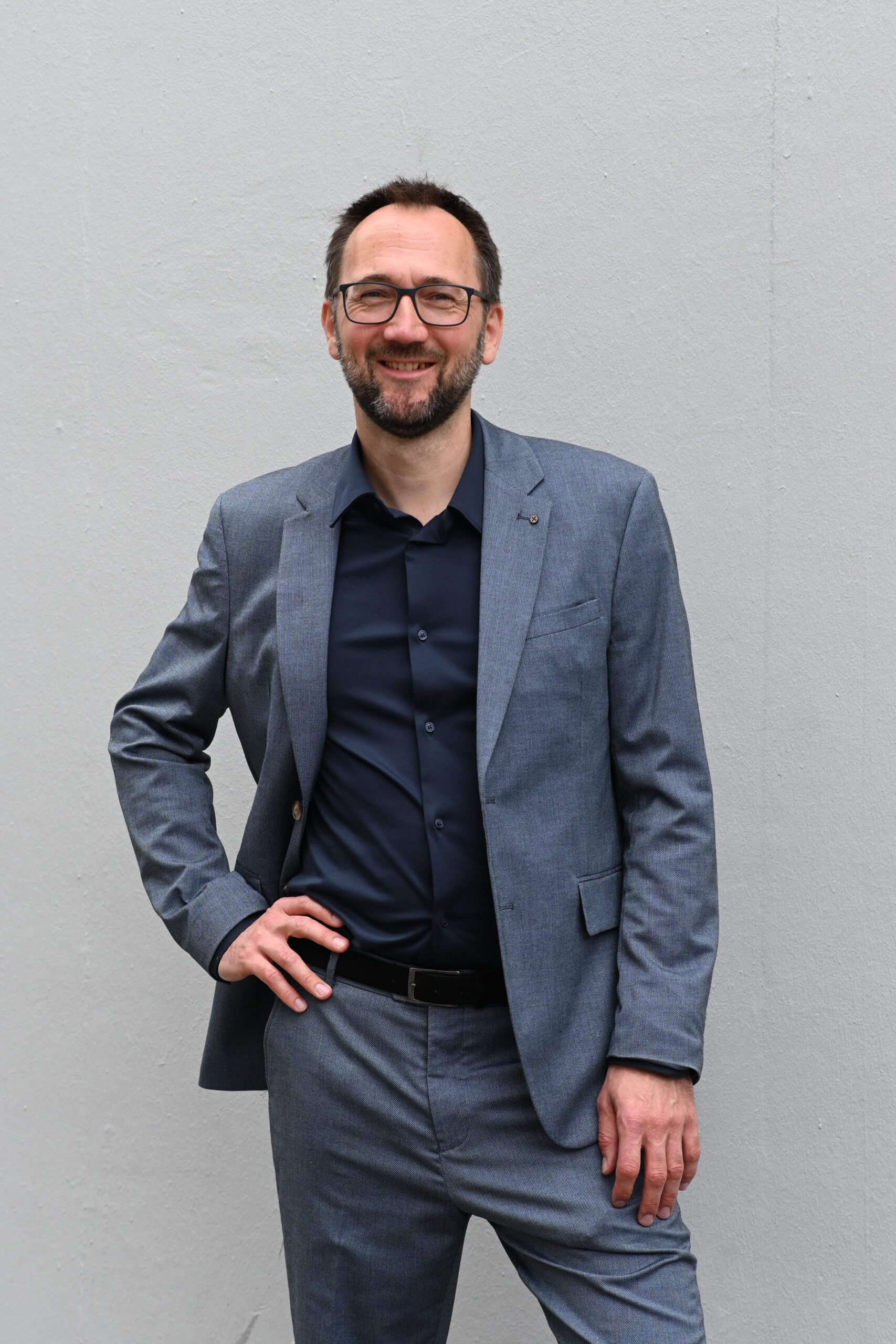
Johann Weichbrodt
Organizational psychologist
Dr. sc. ETH Zurich
More than 12 years of applied research on leadership and development in flexible and agile work environments.
More than 14 years of experience in higher education teaching, with a focus on leadership and self-development.
Degree in psychology (University of Göttingen, Germany) and PhD in organizational psychology (ETH Zurich).
Four-year training in the Integral Gestalt Approach for consulting, therapy, and coaching with Dr. Reinhard Fuhr and Dr. Martina Gremmler-Fuhr.
Certifications: Leadership Circle Profile Practictioner, Immunity-to-Change Facilitator.
Based in Zurich. Father of two.
My Approach to Consulting and Coaching
Transformation can be found everywhere in nature — as living growth, development, and evolution. We as human beings, and our social systems, are capable of develpping in the same manner.
My approach is grounded in developmental theories for individuals as well as for systems and organizations (Kegan, Wilber, Fuhr & Gremmler-Fuhr, Glasl, Willms, and others). It is based on a specific understanding of development as stage-based, transformative, and integral.
Stage-based
Development is not a permanent gradual, linear progression. Rather, in an ongoing process, new “plateaus” emerge again and again. A developmental plateau can also be described as a stage, at which certain patterns have become established because they have proven successful.
These patterns can then be further differentiated, optimized, and expanded — a process we refer to as translational, or horizontal development. At some point, however, the underlying patterns may no longer fit, as the world around them has already changed once again.
Transformative
To continue developing, we then need to change in a transformative, or vertical way. Transformation is always accompanied by uncertainty: we cannot fully know what the next stage will look like until we reach it. A transformational process involves letting go of patterns that no longer fit and allowing a fundamentally new perspective and underlying pattern to emerge.
At the same time, not everything from the past needs to be discarded. Transformation is not the same as disruption; it also means valuing what has been achieved and integrating what is worth preserving into the new.
Integral
In this sense, Integral means recognizing and valuing all stages of development. Development is highly individual: what may already be outdated for one person or organization can be a radical novelty for another. Yet we all need to develop, and the fundamental stages of development cannot be skipped.
Integral also means keeping a multi-perspective view on both the individual and the system, as well as balancing subjective internal perspectives with objective external perspectives.
Selected scientific publications:
FlexWork trend study on the development of flexible work in Switzerland (German)
Soltermann, A., & Weichbrodt, J. (2025). FlexWork Trendstudie. New Work und mobiles Arbeiten in der Schweiz 2024. Olten: Hochschule für Angewandte Psychologie FHNW. https://doi.org/10.26041/fhnw-11786
Agility and power in long-term transformational change (German)
Berli, S., Weichbrodt, J., & Welge, K. (2023). Mythos „machtlose“ Agilität: Was passiert mit der Macht in einer agilen Transformation? In O. Geramanis, S. Hutmacher, & L. Walser (Hrsg.), Organisationale Machtbeziehungen im Wandel: Führung zwischen Zustimmung und Zwang (S. 355–369). Springer Fachmedien. https://doi.org/10.1007/978-3-658-42092-5_22
Leadership in agile software development teams
Weichbrodt, J., Kropp, M., Biddle, R., Gregory, P., Anslow, C., Bühler, U. M., Mateescu, M., & Meier, A. (2022). Understanding Leadership in Agile Software Development Teams: Who and How? In V. Stray, K.-J. Stol, M. Paasivaara, & P. Kruchten (Hrsg.), Agile Processes in Software Engineering and Extreme Programming (S. 99–113). Springer International Publishing. https://doi.org/10.1007/978-3-031-08169-9_7
Designing mobile and flexible work (German)
Weichbrodt, J., & Schulze, H. (2020). Gestaltung mobil-flexibler Arbeit. In M. Zölch, M. Oertig, & V. Calabrò (Hrsg.), Flexible Workforce—Fit für die Herausforderungen der modernen Arbeitswelt? (2. Auflage, S. 157–182). Bern: Haupt Verlag.
Personal growth at work and its relationship to organizational learning
Weichbrodt, J., & Willms, J. (2023). Personal Growth at Work: A case study on the interconnection of individual and collective learning. Presentation at the European Society for Research in Adult Development (ESRAD) 2023 Conference, Greenwich, London, UK.
Feedback as a success factor for self-managing organizations
Bühler, U. M., & Weichbrodt, J. (2022, Juli 8). Feedback as a success factor for self-managing organizations. Paper presented at the 38th EGOS Colloquium, Vienna.
https://doi.org/10.26041/fhnw-8044
Homeoffice as a pandemic measure (German)
Weichbrodt, J., & Schulze, H. (2021). Homeoffice als Pandemie-Maßnahme—Herausforderungen und Chancen. In C. Benoy (Hrsg.), COVID-19: Ein Virus nimmt Einfluss auf unsere Psyche. Einschätzungen und Maßnahmen aus psychologischer Perspektive (2. Auflage, S. 165–173). Stuttgart: Kohlhammer.
Leadership development for new ways of working (German)
Willms, J., & Weichbrodt, J. (2020). Mobiler, flexibler, selbstorganisierter – Führungstransformation als Voraussetzung für erfolgreichen Wandel. In O. Geramanis & S. Hutmacher (Hrsg.), Der Mensch in der Selbst-Organisation (S. 161–175). Springer Fachmedien. https://doi.org/10.1007/978-3-658-27048-3_10
Selected media appearances (German)
Tamedia newspapers, 20.02.2024
Interview on remote work and labor hours regulation
srf 10vor10, 30.06.2022
Expert commentary and live media appearance on the four-day workweek
watson, 19.09.2024
Quotes for an article on remote work / amazon
heise.de 01.06.2022
Interview on remote work and career disadvantages